Paper-Lined Shaker Boxes
Made in sizes #3 through #7, plus the Button Box — each priced individually, by its paper
Examples from past batches, every one lined by hand with an original antique page or a reproduction print drawn from an authentic period design. Because no two papers are alike, no two pieces are ever alike.
New paper-lined work appears in the regular releases, announced through the newsletter the day before.

Shown in an antiqued natural finish

Shown in red milk paint

Shown in black milk paint


Shown in blue milk paint

Shown in green milk paint

Shown in grey milk paint


Shown in yellow milk paint

Shown in New Lebanon Finish

Opened up, with the page in view


Lid and base, both lined

A page from 1808

A closer look at a lining


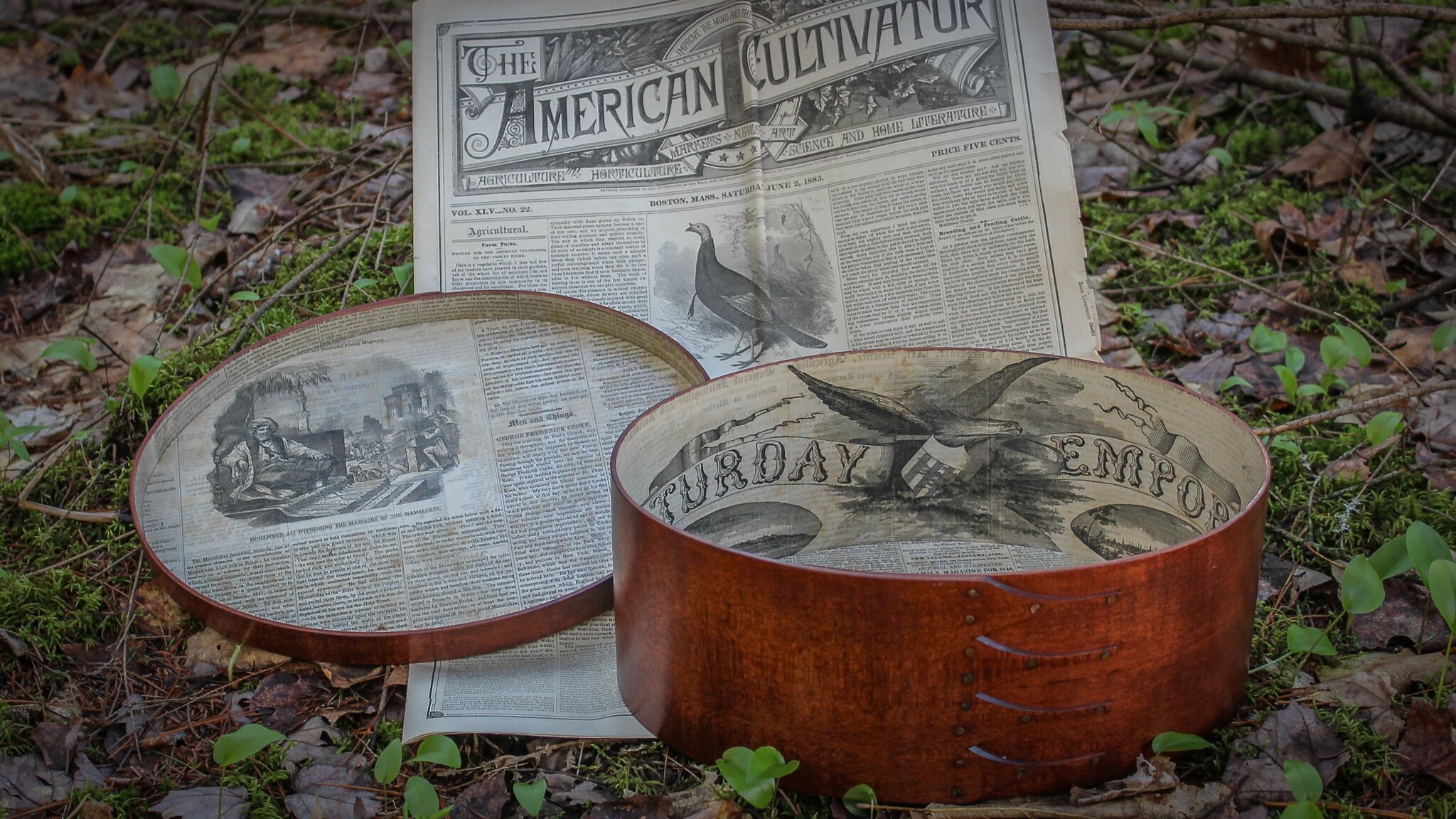
How a page becomes a lining
The interior is painted off-white first, which highlights the print and conceals small imperfections. The page is sealed to strengthen the fibers and fix the ink, coated on the back with adhesive, applied and smoothed by hand, then finished with a clear protective topcoat and a final sealant for long-term durability.
Antique newspaper was never designed to last — small tears or areas of brittleness are accepted and expected, part of each piece’s character. Once a page is sealed into a piece, those imperfections won’t get any worse, and the lining can withstand regular handling. The paper turns out surprisingly tough — when I’ve had to sand off a mistake, it puts up a real fight.
More about the papers, where they come from, and how a piece is priced is on the paper-lined pieces page. How purchasing works.